Is it true that effective flood damage restoration can greatly reduce long-term impacts? Many believe that quick fixes are enough, but that’s rarely the case. Understanding and implementing the right practices can mean the difference between a safe, habitable space and ongoing issues. Let’s explore the critical steps you need to take when faced with flood damage, ensuring you’re prepared to restore your environment effectively.
Key Takeaways
- Conduct a thorough damage evaluation to identify visible and hidden issues, documenting affected areas for insurance claims.
- Ensure safety by assessing potential hazards and equipping all individuals with personal protective gear.
- Remove water promptly using pumps and industrial vacuums, while monitoring humidity levels to prevent mold growth.
- Clean and sanitize affected areas with appropriate solutions, maintaining ventilation for air quality during the process.
- Implement regular maintenance checks for gutters, foundations, sump pumps, and drainage systems to prevent future flooding issues.
Assessing the Damage
When you face the aftermath of a flood, it’s essential to assess the damage thoroughly before taking any further steps. Start with a detailed damage evaluation of your property. Identify visible signs such as water stains, warped flooring, and damaged walls.
Use effective inspection techniques, like checking for hidden moisture behind cabinets and under carpets, as this can reveal underlying issues that aren’t immediately apparent. Document each affected area with photos and notes, as this will help when discussing repairs with professionals or filing insurance claims.
Prioritize areas that pose immediate risks, such as electrical systems and structural integrity. Remember, you’re not alone in this; many have navigated similar challenges. Connecting with local support groups can provide valuable insights and a sense of community.
Ensuring Safety First
Before diving into restoration efforts, ensuring your safety and that of anyone else in the property is paramount. Start by evaluating any potential hazards, like weakened structures or electrical risks. Equip yourself with personal protective gear, including gloves, masks, and waterproof boots, to shield against contaminants and injuries.
It’s crucial to communicate with everyone in your space about these safety measures to foster a sense of belonging and teamwork.
Next, establish a list of emergency contacts. This should include local authorities, emergency services, and trusted friends or family who can offer support. Should you encounter any serious hazards, don’t hesitate to reach out to these contacts for assistance.
Immediate Water Removal
When facing flood damage, your first priority should be immediate water removal.
You’ll need to assess water levels carefully and utilize the proper equipment to tackle the situation effectively.
Assess Water Levels
As soon as the floodwaters recede, evaluating water levels becomes essential for effective restoration.
You need to engage in thorough water level monitoring to understand the extent of damage and prioritize your recovery efforts. This assessment forms the foundation of your flood risk assessment, guiding you in determining what areas need the most urgent attention.
- Identify the highest water mark in the affected areas.
- Document the duration the water remained at each level.
- Note any signs of structural damage or contamination.
Use Proper Equipment
With a clear understanding of the water levels and damage in your space, the next step is to use the right equipment for immediate water removal.
Investing in quality flood recovery equipment, such as powerful pumps and industrial vacuums, is essential. These tools expedite the process and minimize long-term damage.
You’ll want to look into advanced restoration technology, like moisture detectors and infrared cameras, to locate hidden water pockets. This thorough approach ensures you’re addressing every affected area, fostering a sense of security during a chaotic time.
Ensure Safety Precautions
Although immediate water removal is vital for minimizing damage, safeguarding safety precautions is equally important.
Before you plunge into the cleanup process, take a moment to protect yourself and those around you. Wearing appropriate safety gear can prevent injuries from hidden hazards in the water.
It’s also essential to establish an emergency plan, making sure everyone knows what to do if conditions worsen.
- Always wear gloves and boots to protect against contaminants.
- Confirm electrical systems are shut off to prevent shocks.
- Have a trusted contact on standby for support and guidance.
Drying and Dehumidification
When flooding occurs, the urgency of effective drying and dehumidification can’t be overstated, as lingering moisture can lead to severe structural damage and mold growth.
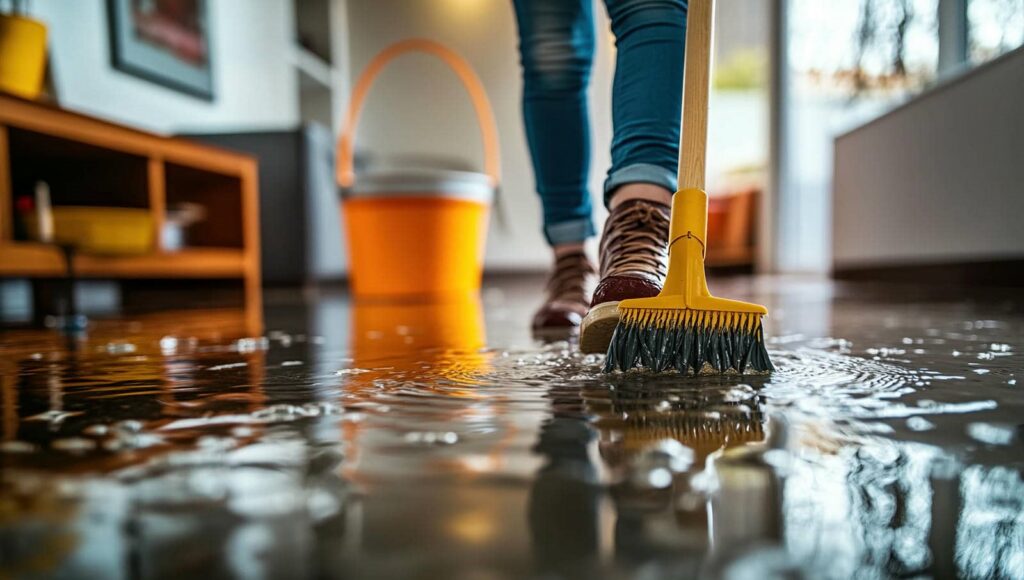
To tackle this, start by evaluating the affected areas and removing any standing water. Use pumps and wet vacuums to expedite this process.
Once the bulk of the water is gone, focus on moisture control. Open windows and doors to enhance air circulation, allowing fresh air to flow in and moisture-laden air to escape.
Utilize dehumidifiers and fans to maintain a consistent airflow, encouraging faster drying. Remember, it’s essential to monitor humidity levels, aiming for a range between 30-60% to prevent mold proliferation.
Take your time and stay thorough; rushing could lead to missed spots. By prioritizing these steps, you’re not just restoring your space but fostering a safe, healthy environment for everyone who belongs there.
Cleaning and Sanitizing
As soon as the drying process is underway, it’s crucial to shift your focus to cleaning and sanitizing the affected areas. This step helps eliminate lingering contaminants and restore a sense of safety and comfort in your space.
You’ll want to employ effective cleaning techniques and appropriate sanitizing solutions to ensure thoroughness.
- Use a mixture of water and mild detergent for standard cleaning.
- Consider commercial-grade sanitizing solutions for more severe contamination.
- Don’t forget to ventilate the area while you clean to keep air quality safe.
Repairing and Restoring
Once you’ve effectively cleaned and sanitized the affected areas, the next step involves repairing and restoring your space to its pre-flood condition.
Start by evaluating the damage to walls, flooring, and personal belongings. Document everything for your flood insurance claim; this will help expedite the process and keep you organized.
Next, prioritize repairs based on urgency and safety. Replace damaged drywall and insulation promptly to prevent mold growth.
If flooring needs replacement, consider materials that can withstand future flooding.
Communicate with contractors about your restoration timeline, ensuring they understand your needs and budget.
It’s crucial to feel supported during this challenging time, and a solid team can make a significant difference.
Preventing Future Flooding
To prevent future flooding, you need to take proactive steps that can greatly reduce risk.
Elevating property structures, installing proper drainage systems, and conducting regular maintenance checks are essential strategies that can protect your home.
Elevate Property Structures
Elevating property structures is a proactive measure that can greatly reduce the risk of future flooding.
By implementing effective elevation techniques, you can safeguard your home and belongings, fostering peace of mind within your community.
Consider the following strategies:
Raise the foundation: Lifting your home above the base flood elevation helps mitigate water damage.
Install flood barriers: These structures can provide an additional layer of protection, keeping floodwaters at bay.
Utilize pilings or piers: This method supports your home while allowing water to flow underneath, reducing pressure on walls.
Install Proper Drainage
Proper drainage is essential for preventing future flooding, and implementing effective systems can save you significant time, money, and stress down the road.
You need to assess your property’s layout and identify how water flows across your land. Installing drainage systems, such as French drains or surface drains, can redirect excess water away from your foundation, minimizing the risk of damage.
Make certain that downspouts and gutters are positioned correctly to guide water flow away from your home. By taking these proactive steps, you create a safer environment for yourself and your loved ones.
Regular Maintenance Checks
While it may be tempting to overlook regular maintenance checks after a flood, staying proactive is essential for preventing future issues.
Regular inspections can help you identify vulnerabilities and implement preventive measures, ensuring your home remains safe and secure.
- Check gutters and downspouts for debris and blockages.
- Inspect your foundation for cracks or signs of water intrusion.
- Test sump pumps and drainage systems to ensure they’re functioning properly.
Frequently Asked Questions
How Much Does Professional Flood Damage Restoration Typically Cost?
Professional flood damage restoration costs vary widely, influenced by factors like damage severity, location, and necessary services. You’ll want to gather restoration estimates to understand your specific situation and budget effectively for recovery.
Can I File an Insurance Claim for Flood Damage?
Yes, you can file an insurance claim for flood damage. Review your policy for specific insurance coverage details, and follow the claim process carefully. Document everything to support your claim and ensure a smoother experience.
How Long Does the Restoration Process Usually Take?
When it rains, it pours, but the restoration timeline usually takes a few days to weeks. Effective drying techniques speed up the process, helping you get back to normal life sooner than you think.
What Are Common Health Risks After a Flood?
After a flood, you face common health risks like mold growth and water contamination. These issues can lead to respiratory problems and infections, so it’s essential to address them promptly to protect your well-being and community.
Do I Need to Hire a Contractor for Minor Repairs?
Sure, you could tackle minor repairs yourself, unless you enjoy living in a Pinterest fail! Seriously, weigh your DIY skills against potential pitfalls. Hiring a contractor might save you time and stress in the long run.
Conclusion
In the aftermath of a flood, your home can feel like a shipwreck, adrift in chaos. By adhering to these best practices, you’re not just restoring walls and floors; you’re rebuilding your sanctuary. Each step you take symbolizes your resilience against nature’s fury—transforming despair into hope. As you document your journey, remember that with every repair, you’re safeguarding your property and fortifying your spirit against future storms. Your diligence today paves the way for a brighter tomorrow.