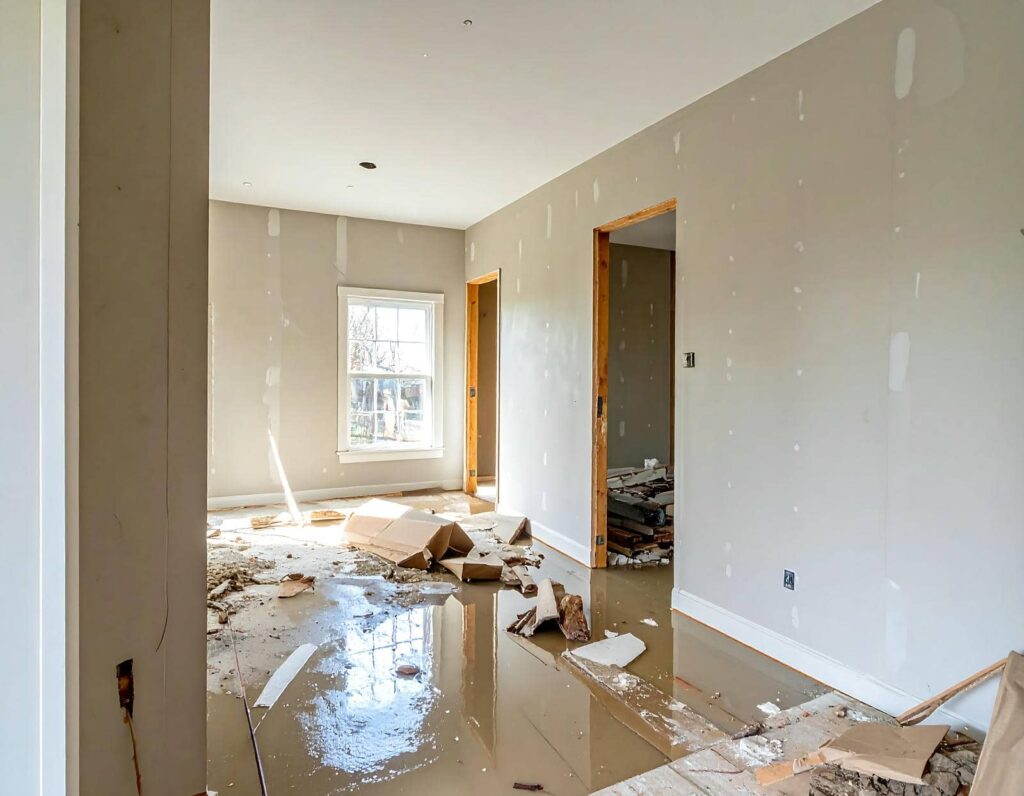
Most homeowners underestimate the urgency of proper flood cleanup, which can greatly impact health and safety. When water invades your home, immediate action is vital to prevent further damage and mold growth. Understanding the best emergency solutions can make all the difference in your recovery process. From evaluating the situation to cleanup techniques, knowing the right steps to take is essential. Let’s explore the most effective strategies to tackle the flood aftermath efficiently.
Key Takeaways
- Immediate Water Removal: Use wet/dry vacuums and submersible pumps to quickly extract standing water and prevent further damage.
- Safety Precautions: Assess the area for hazards, wear protective gear, and ensure electricity is off to avoid shock risks.
- Effective Drying: Utilize high-velocity fans and dehumidifiers to expedite the drying process, monitoring humidity levels for optimal results.
- Cleaning and Disinfecting: Apply specialized cleaning solutions to eliminate mold and bacteria, ensuring thorough scrubbing of affected surfaces.
- Professional Restoration: Consult multiple contractors for repair estimates and prioritize quality work to ensure a safe and livable home post-cleanup.
Assessing the Damage and Safety Precautions
Before you plunge into cleanup, it’s crucial to assess the damage and prioritize safety. Start by surveying your home, checking for structural issues, and noting areas affected by water. This damage assessment helps you identify what requires immediate attention.
Look for hazards like downed power lines or unstable surfaces that could pose risks during cleanup.
Next, implement safety measures. Wear protective gear, including gloves and boots, to shield yourself from contaminants. Confirm your electricity is off to avoid shock risks.
If you smell gas, evacuate immediately and contact professionals.
Immediate Water Removal Techniques
As soon as you’ve ensured the area is safe, immediate water removal becomes your top priority to prevent further damage and mold growth.
Start with water extraction using a wet/dry vacuum to remove standing water quickly. If the flooding is extensive, you might want to take into account pump techniques, like submersible pumps, which can efficiently handle larger volumes of water.
It’s essential to work methodically, ensuring you cover all affected areas. Don’t forget to check hidden spaces, such as basements or crawl spaces, where water can accumulate unnoticed.
As you tackle this task, remember that time is of the essence. Acting swiftly minimizes damage and helps create a sense of control amid the chaos.
You’re not alone in this; many homeowners face similar challenges, and knowing the right water removal techniques can make a significant difference in your recovery process.
Drying and Dehumidification Methods
Effective drying and dehumidification are vital steps in flood recovery, as they markedly reduce the risk of mold and structural damage.
Start by evaluating the situation and selecting the right drying equipment. High-velocity fans and air movers can expedite evaporation, while various dehumidifier types, such as refrigerant and desiccant, effectively remove moisture from the air.
You’ll want to position these devices strategically throughout the affected areas to maximize airflow and moisture extraction. Monitor humidity levels frequently to ensure you’re achieving ideal drying conditions.
Remember, every home is different, and adapting your approach based on your specific situation will yield the best results.
Be patient, as thorough drying can take several days, but it’s essential for preventing long-term issues. Engaging in this meticulous process protects your home and fosters a sense of security for you and your loved ones during this challenging time.
Cleaning and Disinfecting Affected Areas
Once you’ve completed the drying and dehumidification process, it’s time to tackle the cleaning and disinfecting of affected areas. This step is vital for mold prevention and ensures a safe environment for you and your loved ones.
Utilize effective sanitation techniques to eliminate harmful bacteria and pathogens.
Here are three essential steps to follow:
Use appropriate cleaning solutions: Opt for products specifically designed to combat mold and mildew.
Scrub surfaces thoroughly: Pay special attention to porous materials like wood and drywall, as these can harbor mold spores.
Ventilate the area: Open windows and use fans to promote airflow, which aids in drying and reduces the risk of mold growth.
Restoration and Repair Considerations
While the cleanup process is essential, restoration and repair considerations should follow closely behind to confirm your home returns to a safe and livable state. Evaluating restoration timelines is critical; you’ll want to understand how long it’ll take to restore your home to its former condition. Typically, this can vary based on the extent of the damage and the materials involved.
Next, consider the repair costs. Get quotes from multiple contractors to verify you’re making informed decisions while staying within your budget. Remember, investing in quality repairs now can save you from more significant issues down the line.
As you navigate this challenging time, lean on your community for support and recommendations. Staying connected can ease the emotional burden and help you find trusted professionals who understand your needs.
Your home deserves to be restored, and you deserve to feel secure in it once again.
Frequently Asked Questions
How Can I Prevent Future Flooding in My Home?
To prevent future flooding in your home, consider implementing flood prevention strategies like proper drainage systems and sump pump installation. These measures can considerably reduce your risk and provide peace of mind for you and your family.
What Insurance Coverage Is Available for Flood Damage?
You might think flood insurance is unnecessary, but it offers essential coverage options for your home. Understanding these policies ensures you’re prepared for potential damage, providing peace of mind and financial security when disaster strikes.
How Can I Identify Hidden Water Damage?
To identify hidden water damage, you’ll want to check for hidden leaks and use moisture detection tools. Look for discoloration, warped surfaces, or musty odors; these signs can indicate issues needing your attention and care.
Should I Hire Professionals or DIY for Cleanup?
You should weigh your options carefully. DIY techniques can save money but may lack expertise. Professional services ensure thorough cleanup and prevent future issues, offering peace of mind. Consider your comfort level and resources before deciding.
What Are the Health Risks Associated With Floodwater?
Floodwater can contain harmful contaminants, leading to various health effects like infections, respiratory issues, and gastrointestinal illnesses. You need to be cautious, as exposure can put you and your loved ones at serious risk.
Wrap-Up
In the aftermath of a flood, acting quickly can make a significant difference. By following these five essential emergency cleanup solutions, you protect your home and safeguard your family’s health. Remember, thorough assessment, swift water removal, effective drying, rigorous cleaning, and professional restoration are key to recovering from such an overwhelming event. Stay prepared and prioritize safety to ensure long-term recovery.